Wolbachia Mosquitoes Cut Dengue and Chikungunya Infections by 69% in Brazil Trial
In a four-year trial with 5,757 schoolchildren in Belo Horizonte, Brazil, areas where Wolbachia-carrying mosquitoes were released saw 68.6% fewer dengue, Zika and chikungunya infections.
 By Emily Park3 min read
Children living in parts of Belo Horizonte, Brazil, where mosquitoes carrying the Wolbachia bacterium were released had 68.6% fewer infections with dengue, Zika or chikungunya than children in comparison areas, according to results of the EVITA trial presented on 21 November 2026 at the annual meeting of the American Society of Tropical Medicine and Hygiene in National Harbor, Maryland.
The four-year trial was run by Brazilian and US researchers from 2020 to 2024, according to a release from Emory Health Sciences. Protection was 68.5% against dengue and 73.3% against chikungunya, and it held through 2024, when Brazil had the largest recorded dengue outbreak in its history.
How the trial worked
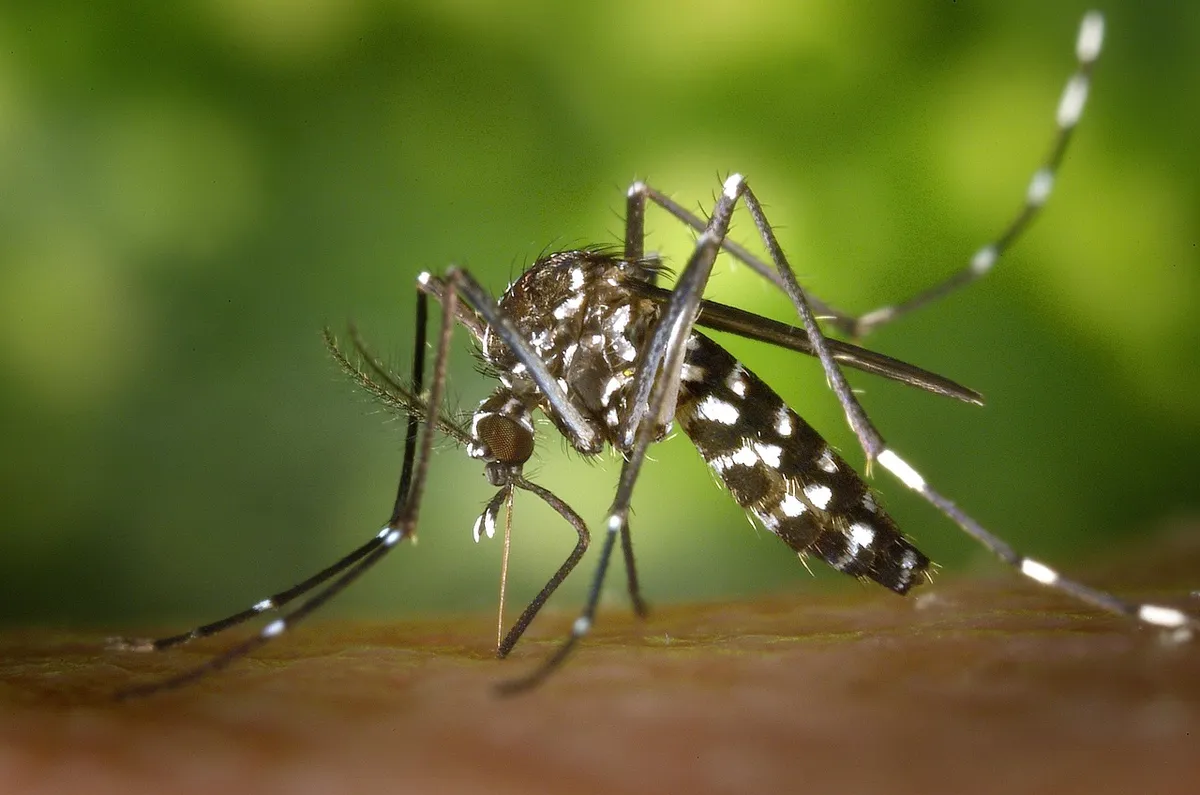
The trial released Aedes aegypti mosquitoes carrying the wMel strain of Wolbachia. Luciano Moreira of Fiocruz and the World Mosquito Program in Brazil said in the release that a locally adapted strain had been developed for Belo Horizonte and had stayed established in the wild for more than three years.
The city was divided into 58 areas, each built around a school. The researchers randomly assigned 29 of them to receive Wolbachia mosquito releases, which ran from January 2021 to May 2022, on top of standard vector control (insecticide spraying and removing places where mosquitoes breed). The other 29 got standard control alone. Because both groups got the same spraying, the result measures what Wolbachia added to existing efforts, Tech Times reported.
The 5,757 children gave a blood sample in 2020 and then once a year until 2024. Their blood was tested for antibodies to the three viruses, so the trial counted infections rather than clinic visits. That matters for dengue: Tech Times notes that, according to the US Centers for Disease Control and Prevention, roughly three in four dengue infections cause no illness at all.

This means that children living in communities where Wolbachia-infected Aedes aegypti mosquitoes were established had substantially lower arboviral infection.
Sri Edupuganti, co-principal investigator, Emory University School of Medicine, as quoted by Emory Health Sciences
Derek Cummings of Johns Hopkins University, another of the trial's co-principal investigators, said in the release that "the intervention substantially reduced dengue infections during Brazil's largest recorded outbreak". Dr David Hamer of Boston University, who wasn't involved in the trial, called the results "really exciting", Tech Times reported.
Who ran it and what comes next
The Brazilian team included the Federal University of Minas Gerais, the World Mosquito Program, Fiocruz and the Faculdade de Medicina de São José do Rio Preto, where tens of thousands of blood samples were tested. Emory, Yale and Johns Hopkins universities and the University of Florida took part from the US. The trial was funded by the US National Institutes of Health and the Brazilian Ministry of Health. Mauro Teixeira of the Federal University of Minas Gerais, a co-principal investigator, said in the release that schools closed for COVID-19 just as enrolment began.
The release says the results will be submitted to a scientific journal for peer review. An earlier randomised trial of Wolbachia in Yogyakarta, Indonesia, reported a 77% reduction in dengue, but Tech Times points out that it counted laboratory-confirmed cases in people with fever, so the two figures can't be compared directly. Goodnewsly has previously reported on a different mosquito approach, genetically modified mosquitoes released to target dengue.
What we don't know yet The results haven't been peer-reviewed, and no confidence intervals have been published. There were too few Zika cases to measure any effect on Zika. The trial covered one city, and Belo Horizonte's climate, housing and mosquitoes may differ from those elsewhere.